 info@magnet-store.co.uk
  0800 009 6562

Compression bonded and injection moulded
Bonded Magnets: Complex Shapes Sintered Magnets Cannot Make
Bonded magnets are made by mixing magnetic powder with a polymer binder, then pressing or moulding the mixture to shape. They trade some magnetic output for geometry, tolerance and multi-pole freedom that sintered magnets cannot match.
- Net shape, no secondary machining
- Complex and thin-walled geometry
- Multi-pole magnetisation in one part
What Is a Bonded Magnet?
A bonded magnet is a composite. Magnetic powder is blended with a polymer binder, and the mixture is then pressed or moulded into the finished part. The binder holds the powder in place but carries no magnetism itself, so a bonded magnet always produces less field than a fully dense sintered magnet of the same material.
What you gain in return is control over shape. Because the part is formed rather than cut, it can be produced close to final dimensions, in geometries that would be fragile, wasteful or simply impossible to machine from a sintered blank.
Bonded magnets can be made from neodymium, ferrite or samarium cobalt powder. The powder sets the magnetic behaviour; the binder sets the temperature limit, the chemical resistance and how the part can be formed.
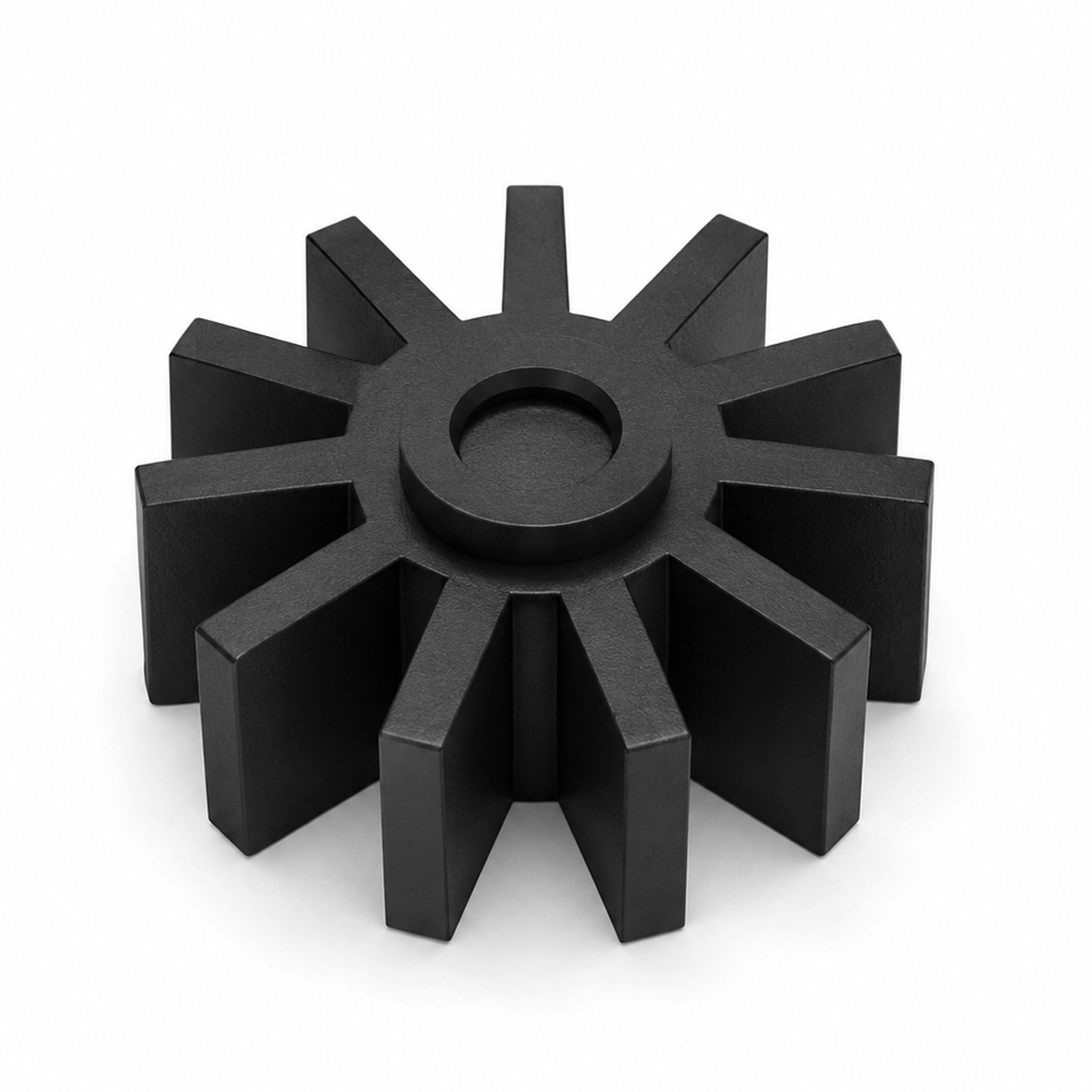
Two Manufacturing Routes
Almost every bonded magnet is made one of two ways, and the choice drives both what the part can do and what it can cost.
-
01
Compression bonded
Magnetic powder is mixed with an epoxy binder, pressed in a die under high pressure, then cured. The high pressure allows a greater proportion of magnetic powder, so compression bonded parts generally reach a higher magnetic output than injection moulded parts of the same material. Geometry is limited to what can be pressed and ejected from a die, so shapes are typically rings, discs, arcs and simple profiles.
-
02
Injection moulded
Magnetic powder is compounded with a thermoplastic binder and injected into a mould. The binder content is higher, so magnetic output is lower, but the process allows far more complex parts: thin walls, internal features, undercuts, and over-moulding directly onto a shaft, hub or insert to produce a finished assembly in one operation.
If you are not sure which route suits your part, send the drawing or describe the application and we will advise which is realistic for the geometry, the output you need and the quantity involved.
When a Bonded Magnet Is the Right Choice
A bonded magnet is rarely the answer when raw holding force is the only requirement. It becomes the right answer when the shape, the tolerance or the pole pattern matters more than maximum field.
Where bonded magnets earn their place:
- Net shape, so no grinding or slicing after forming
- Tight dimensional tolerance without secondary machining
- Thin walls and small features that would chip in a sintered part
- Multi-pole patterns magnetised into a single component
- Over-moulding straight onto a shaft, hub or insert
- Complex profiles, undercuts and internal detail
- Lower part-to-part variation on intricate geometry
- Less material waste than machining from a sintered blank
Typical uses include sensor and encoder rings, small motor and stepper rotors, position sensing components, and assemblies where the magnet has to sit inside a moulded housing rather than be bonded into one afterwards.
Bonded Magnet Materials
The powder decides the magnetic behaviour. The binder decides the temperature limit and how the part can be formed.
-
Bonded neodymium
The most common bonded material. Uses rapidly quenched neodymium powder, which is isotropic, so it can be magnetised in whichever direction or pole pattern the application needs. Gives the highest output of the bonded materials.
-
Bonded ferrite
Lower output but low cost and good corrosion resistance. Flexible magnetic sheet and tape are bonded ferrite in a rubber or vinyl binder, which is why they can be cut with scissors and rolled.
-
Bonded samarium cobalt
Used where the operating temperature or the corrosion environment rules out bonded neodymium. Higher material cost, and normally specified only when the application genuinely requires it.
Because the binder is a polymer, the maximum operating temperature of a bonded magnet is usually set by the binder rather than the magnetic powder. That is the single most common reason a bonded part is ruled out, so tell us the operating temperature early.
From Prototype to Production
Bonded magnets are tooled parts, so the geometry needs to be right before volume production starts.
Our prototyping programme has no minimum order quantity on most custom magnets, which lets you test a specification before committing. Once the part is proven, custom magnet manufacturing and bulk and wholesale supply cover the production stage.
Request a Bonded Magnet Quote
Send a drawing, a specification or a description of the application and we will advise whether compression bonded or injection moulded is the realistic route.
Useful things to include: the operating temperature, the pole pattern you need, the space envelope, whether the magnet sits on a shaft or inside a housing, and the quantity you expect.
Bonded Magnet FAQs
What is a bonded magnet?
A bonded magnet is magnetic powder mixed with a polymer binder, then pressed or moulded to shape. The binder holds the powder together but is not magnetic itself, so a bonded magnet produces less field than a sintered magnet of the same material.
What is the difference between compression bonded and injection moulded magnets?
Compression bonded magnets are pressed in a die with an epoxy binder and generally reach a higher magnetic output. Injection moulded magnets use a thermoplastic binder and allow far more complex geometry, including thin walls, undercuts and over-moulding onto a shaft or insert.
Are bonded magnets weaker than sintered magnets?
Yes. The binder takes up volume that carries no magnetism, so for the same material a bonded magnet produces less field than a fully dense sintered one. Bonded magnets are chosen for shape, tolerance and pole pattern rather than maximum pull.
Can bonded magnets be made in complex shapes?
Yes, and this is usually the reason to choose them. Because the part is formed rather than machined, bonded magnets can be produced net shape with thin walls, internal features and multi-pole patterns in a single component.
What limits the operating temperature of a bonded magnet?
Usually the binder rather than the magnetic powder. Because the binder is a polymer, it typically sets the maximum operating temperature, which is why the operating temperature should be confirmed early in the specification.
Which materials can bonded magnets be made from?
Bonded magnets can be made from neodymium, ferrite or samarium cobalt powder. Bonded neodymium gives the highest output, bonded ferrite is lower cost and corrosion resistant, and bonded samarium cobalt is used where temperature or environment rules out neodymium.
Can you magnetise multiple poles into one bonded magnet?
Yes. Bonded neodymium made from rapidly quenched powder is isotropic, which means it can be magnetised in whichever direction or multi-pole pattern the application needs.
Can I order bonded magnet samples before production?
Yes. Our prototyping programme has no minimum order quantity on most custom magnets, so a specification can be tested before committing to a production run.