 info@magnet-store.co.uk
 0800 009 6562


Magnets for Robotics
Motors, position sensing, grippers and quick-release parts all rely on magnets. This guide shows which magnet suits each job and what to check before you fit it.
What magnets do in a robot
Motors
In a typical brushless motor, permanent magnets on the rotor turn around fixed coils. The shape and magnetisation depend on the motor design, and arc magnets line the rotor of many motors. For rebuilds and new motor designs, see magnets for drone motors.
For a rotor magnet with several poles, see multi-pole magnets.

Angle and position sensing
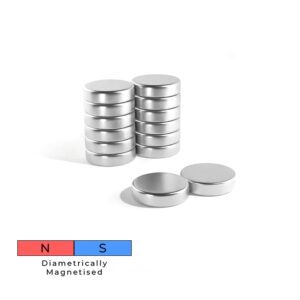
Many on-axis angle sensor chips read a diametrically magnetised magnet turning above the chip, centred on the shaft. The chip maker's data sheet gives the magnet and air gap. Hall-effect sensors and reed switches react to a passing magnet, for end stops, homing and counting.
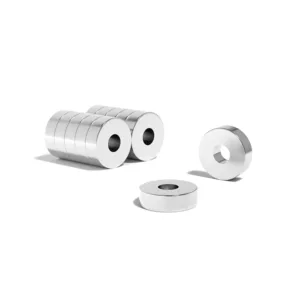
For a magnet that fits around the shaft, see diametric ring magnets.
Grippers and pick-up tools
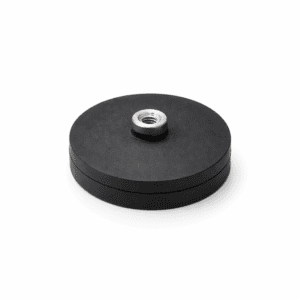
A magnetic gripper picks up steel parts with no fingers to line up. Pot magnets with a thread or a hole bolt to the end of an arm.
Quick-release parts and docking
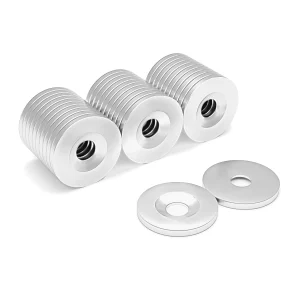
Magnets locate tool heads and covers, pull them into place and let them come off without screws. A magnetic coupling drives a part through a sealed wall.

Getting it right
Magnetised the right way
Sensors and motors depend on the magnetisation direction. Our magnetisation direction guide shows the options for each shape.
Heat
Motors run warm. Every magnet loses some strength as it heats up, and above its maximum operating temperature part of that loss is permanent. Each product page lists its maximum temperature, and our high temperature magnets are made for hotter jobs.
For schools and teams
Building with a class or a competition team? See magnets in education.
From prototype to production
Build your prototype with stock magnets. When you go into production, we can make magnets to your drawing. Send the drawing and the quantity with your enquiry.
If you can't see the grade or size you require, get in touch for a custom manufacturing quote.
Check the strength first
See how strong a magnet is at your gap, through paint, wood or a cover, before you buy.
Need a size we don't list?
If you can't see the grade or size you require, get in touch for a custom manufacturing quote.
Questions
Which magnet does a magnetic angle sensor need?
Most on-axis sensors use a diametrically magnetised disc or cylinder, with north and south on opposite sides of the round face, centred over the chip and turning with the shaft. The sensor maker's data sheet gives the size and air gap.
What's the difference between a Hall sensor and a reed switch?
A Hall-effect sensor is an electronic chip: depending on the type, it gives a reading that follows the field or switches on and off. A reed switch is a mechanical contact that a magnet opens or closes.
Can a magnetic gripper pick up aluminium?
No. A magnet holds only to iron and steel. For aluminium or plastic parts, use a vacuum or finger gripper.
Can you make magnets for our motor or sensor?
Yes, we make motor and sensor magnets to your drawing, including arc, diametric and multi-pole magnets, in prototype or production quantities.