 info@magnet-store.co.uk
  0800 009 6562

Magnet pull force calculator
Calculate how much a neodymium magnet can hold with confidence.
Choose a shape, enter the dimensions in millimetres, then pick a grade. You get the estimated maximum straight pull against thick, flat steel, a design range around it, and in stock magnets that match. Free to use, no sign-up. Metric in, metric out: millimetres and kilograms, with newtons and pounds alongside.
Magnet strength explained: what pull force means
Magnet pull force tells you how much force is required to pull a magnet straight off steel. It is measured on thick, flat, clean mild steel with nothing in between, such as paint, tape or a coating. It is the standard way to compare how strong magnets are, and is commonly reported in measurements such as kilograms (kg), newtons (N) or pounds (lb).
Think of it as a ceiling. It is the most a magnet can hold in perfect conditions. A real fixing almost always holds less, because paint, thin steel, a sideways load or even heat each take some of it away. This guide shows how much each of those takes away, so you can trust MagNet™'s result and choose the right magnet first time.
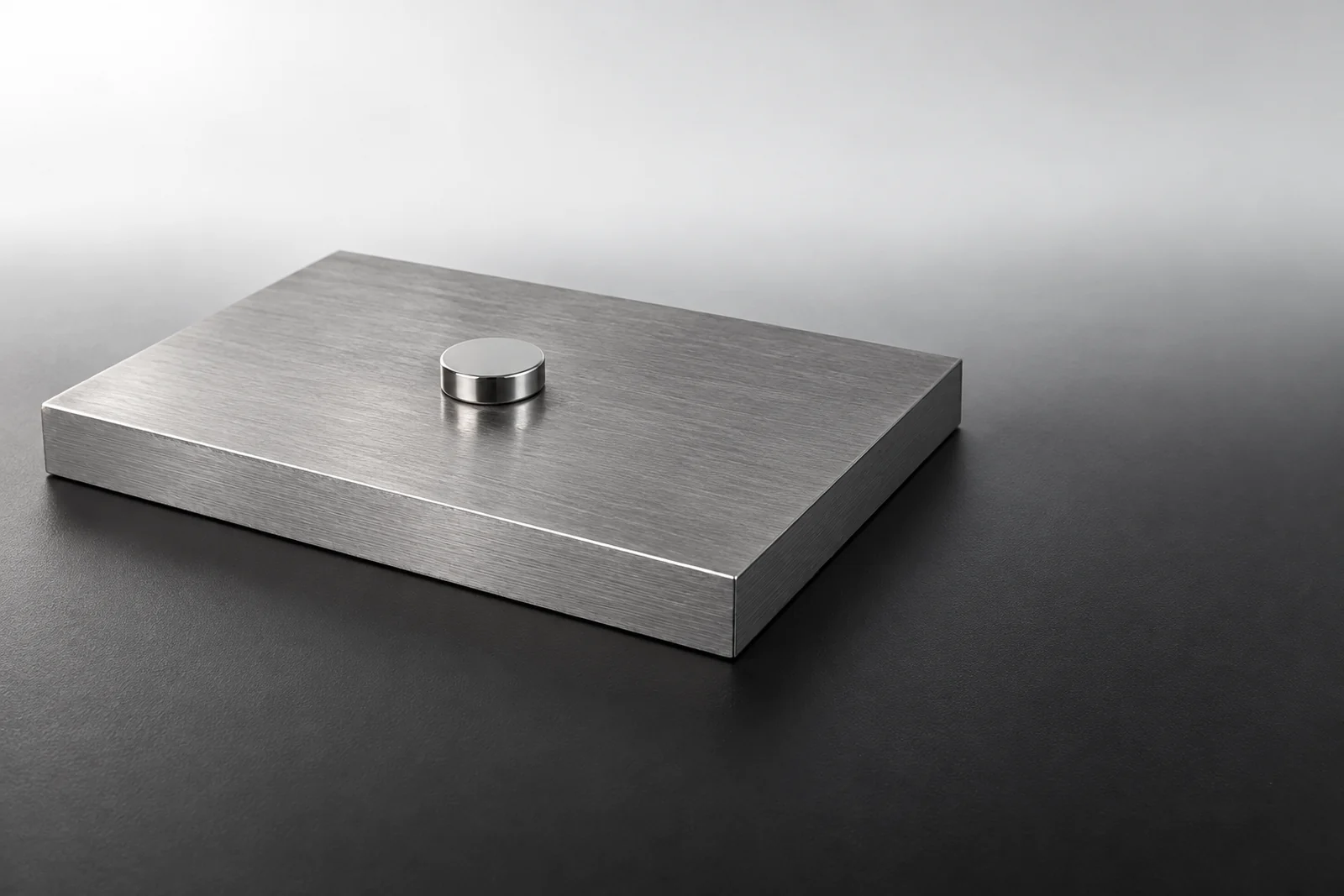
How to use the MagNet™ Pull Force and Field Engine
- Choose your shape. Click “Edit magnet” at the top of MagNet™, then pick Disc, Block or Ring, or More for other shapes.
- Enter your size. Type the dimensions in millimetres, or switch to inches. For a disc that is the diameter and the thickness.
- Choose the grade and direction. Pick the grade on the magnet, such as N42 or N52, and the direction it is magnetised in. A disc or ring is magnetised through its thickness (axial) or across its width (diametric). For a block, choose the side it is magnetised through, such as its length, width or thickness. Our magnetisation direction guide shows each one.
- Read the result. The estimated maximum pull appears straight away, in kg, N or lb.
Now you have your ceiling, it's time to add in your environmental factors. If your magnet doesn't have direct contact with the steel, use our “Through a gap” feature. It shows how much pull force remains through an air gap, paint, tape or a cover. Our “Thin steel” feature shows the influence of the metal thickness on the pull force. The “By pull force” and “By field strength” features work backwards from the pull force you need to find the ideal magnets, showing you the magnets we have in stock and others we can custom manufacture. With a free account you can also adjust for temperature, the direction of pull force and magnet stacking, view the “Field map” and “Demagnetisation risk”, and download a datasheet.
How to read your result
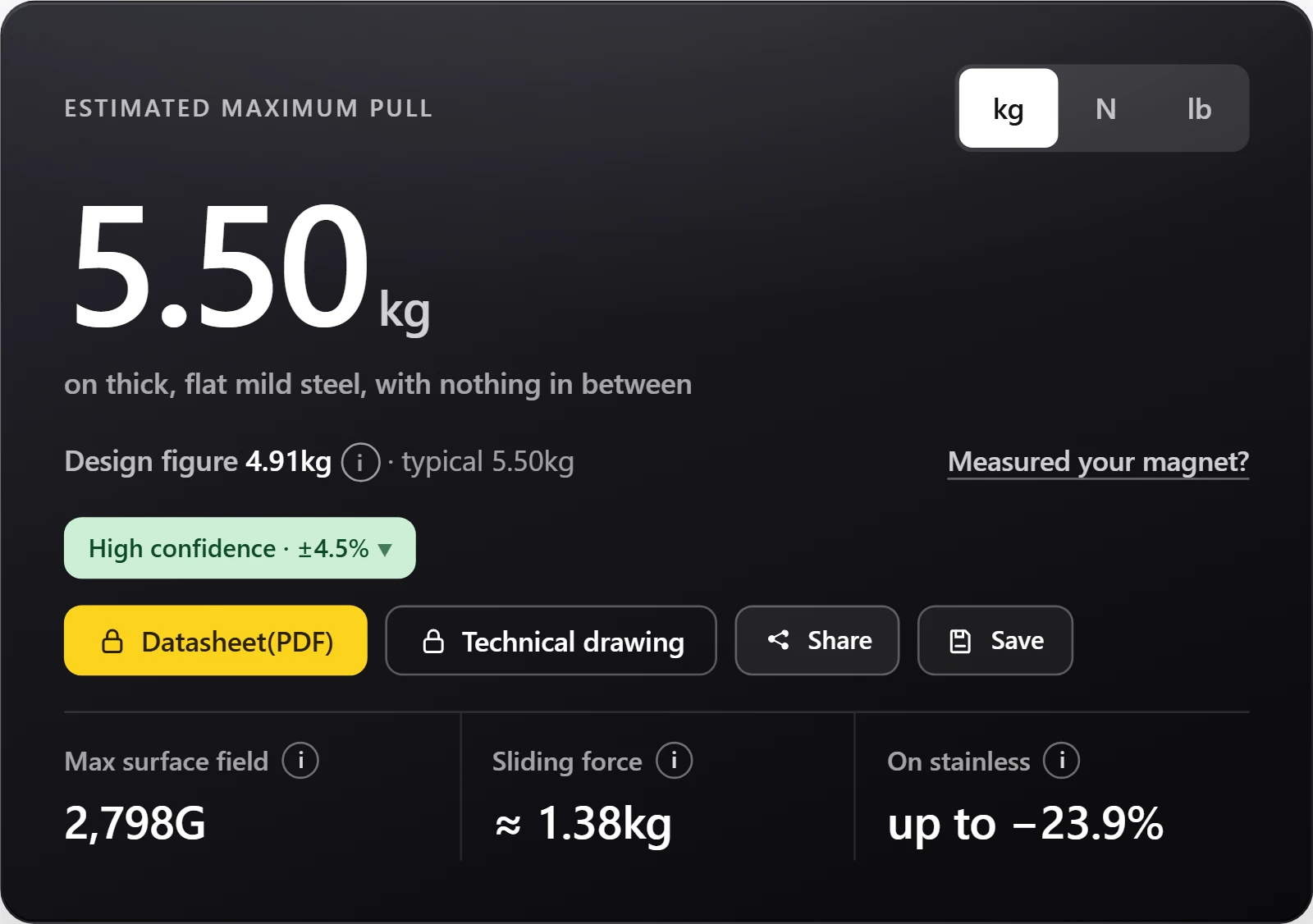
MagNet™ provides you with a number of values, the main one being the estimated maximum pull. This is the force needed to pull the magnet straight off thick, flat, clean mild steel, in perfect conditions. You can convert between kg, N and lb.
The Design figure is the lower, safe number to plan with. It is lower than the maximum pull force because no two magnets of the same grade are exactly alike, and every estimate has a tolerance. The Design figure allows for both. For a Ø15mm × 5mm N42 disc magnet, the Design figure is 4.91kg against a maximum pull force of 5.50kg. Use it whenever the pull force is critical.
The accuracy label, such as “high confidence” with a ± range, tells you how closely we expect the figure to hold for a magnet of that size and grade. It is still an estimate, so confirm it in your own application.
Below that sit three quick checks. “Max surface field” is the strongest field at the magnet's face, in gauss. “Sliding force” is the sideways force needed to slide the magnet along bare steel, which is far lower than the straight pull. “On stainless” shows how much less the magnet holds on steels that carry less magnetism.
Magnet pull force chart
Estimated maximum pull for twelve popular neodymium magnet sizes, on thick, flat mild steel with nothing in between. Every figure comes from MagNet™. Each size links to the magnet in our shop, and MagNet™ gives the figure for any other size in seconds.
| Magnet size | N42 | N52 |
|---|---|---|
| Ø6mm × 2mm disc | 0.59kg | 0.73kg |
| Ø6mm × 3mm disc | 0.90kg | 1.11kg |
| Ø8mm × 3mm disc | 1.38kg | 1.71kg |
| Ø10mm × 2mm disc | 1.16kg | 1.44kg |
| Ø10mm × 3mm disc | 1.91kg | 2.36kg |
| Ø15mm × 5mm disc | 5.50kg | 6.80kg |
| Ø16mm × 3.5mm disc | 4.22kg | 5.21kg |
| Ø20mm × 10mm disc | 12.12kg | 14.98kg |
| 10mm × 5mm × 2mm block | 0.95kg | 1.18kg |
| 10mm × 10mm × 3mm block | 2.33kg | 2.87kg |
| 20mm × 10mm × 2mm block | 2.27kg | 2.81kg |
| 25mm × 15mm × 4mm block | 6.45kg | 7.97kg |
There are a couple of ways to increase or decrease the pull force. The first is the grade: going from N42 to N52 adds about a quarter more pull. The second is to adjust thickness of the magnet. On thin magnets, thickness can matter more than face size: a Ø20mm disc holds 1.25kg at 1mm thick but 4.33kg at 3mm. So a smaller, thicker magnet can beat a bigger, thinner one: a 10mm × 10mm × 3mm block holds 2.33kg, more than the 2.27kg of a 20mm × 10mm × 2mm block.
How much weight can a magnet hold?
Less than its pull force, in almost every real job. The pull force is a maximum for perfect conditions: a straight pull, thick bare steel and no gap at all. It is not a safe working load.
Pull force figures are for ideal conditions. Plan with the Design figure, which allows for small differences between magnets, then allow for your own conditions. For three magnets from the chart:
- Ø10mm × 3mm disc, N42: 1.91kg maximum pull force, 1.68kg Design figure.
- Ø20mm × 10mm disc, N42: 12.12kg maximum pull force, 10.8kg Design figure.
- 25mm × 15mm × 4mm block, N42: 6.45kg maximum pull force, 5.62kg Design figure.
To choose a magnet for a known load, use MagNet™’s “By pull force” feature to find the magnets that give it, then check each one’s Design figure.
Allow more margin if the load can be knocked, jolted or vibrated, if it hangs over people, or if the magnet is loaded sideways. Large items spread their weight, and that changes the load on each magnet. You will commonly need several magnets, positioned at different points, to keep a large item secure. Test your own application before you rely on it.
Six things that reduce magnet pull force
Each of these takes some of the pull away. MagNet™ has a check for most of them.
1. Gaps, paint and coatings
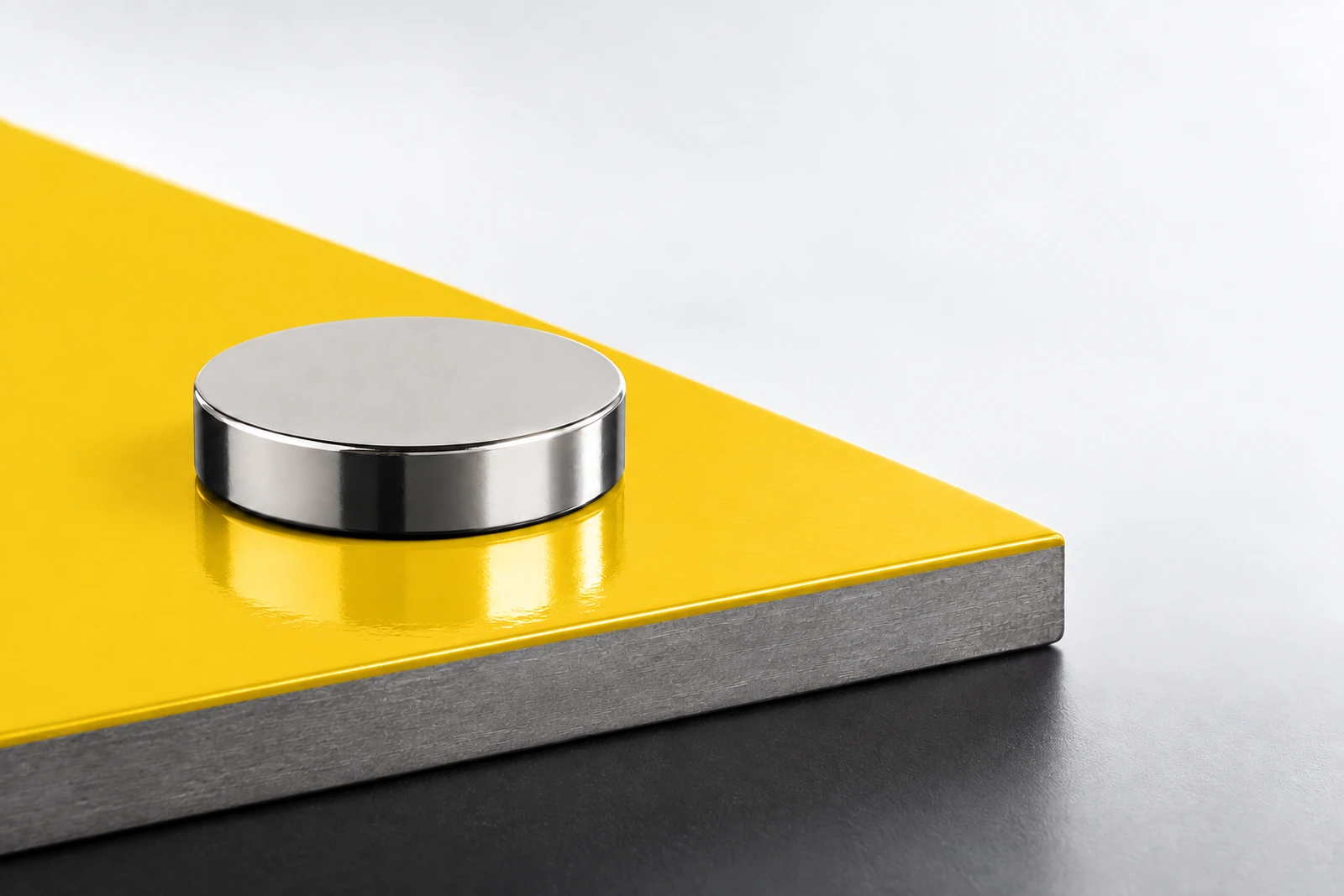
Anything that holds the magnet away from the steel is a gap: air, paint, powder coating, plastic, tape, a fabric cover or a bracket that does not sit flat. Pull falls quickly as that gap grows. For a Ø20mm × 5mm N42 disc, a 0.1mm gap leaves 91% of the pull, 0.5mm leaves 67%, 1mm leaves 50% and 2mm leaves only 32%.
2. Steel thickness
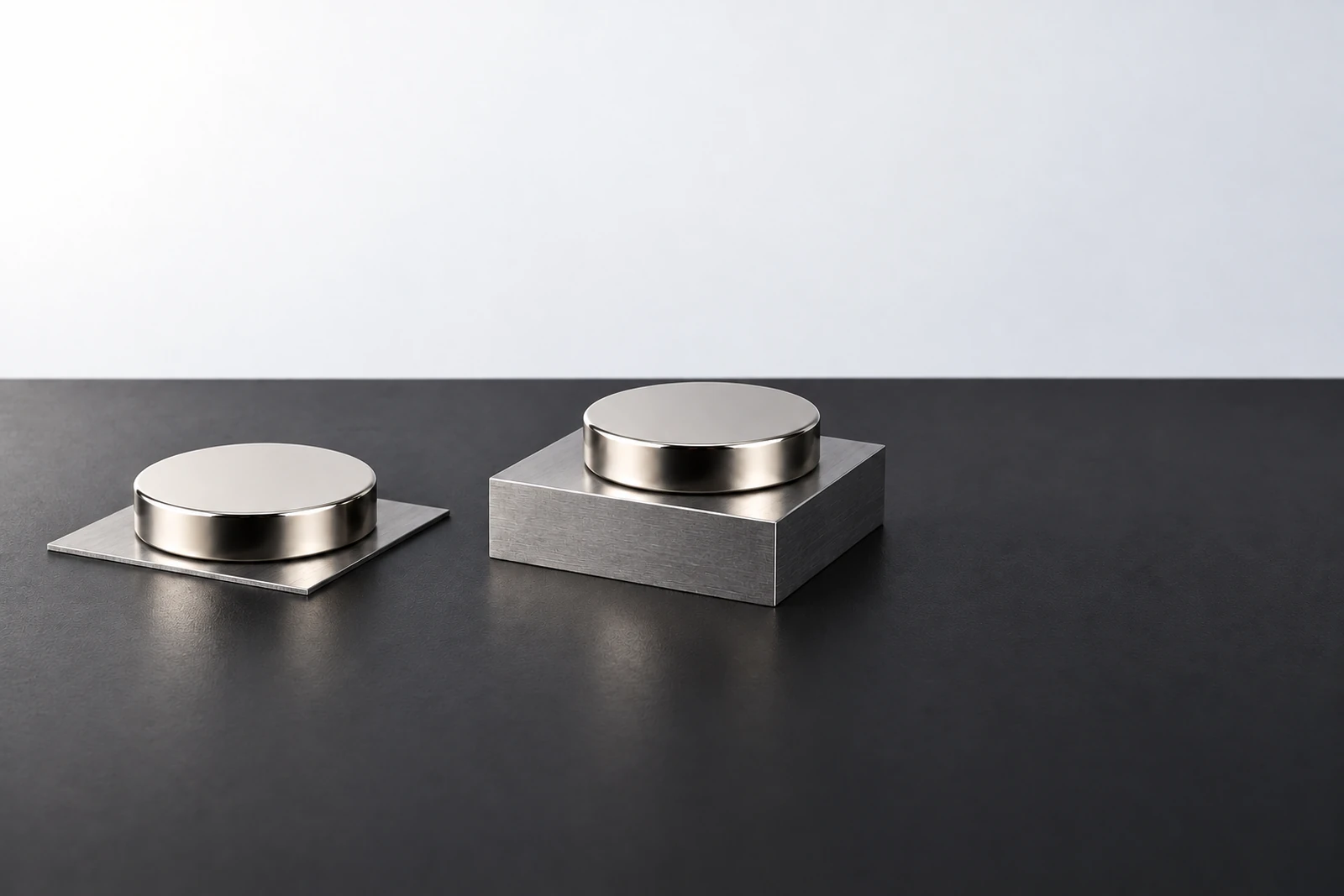
The steel has to carry the magnet's field. A thin sheet cannot carry all of it, so the magnet holds less. Past a certain thickness, extra steel adds nothing. MagNet™'s “Thin steel” section shows that point for your magnet.
3. Steel type and surface
The figures assume mild steel. Many stainless steels, cast iron and some tool steels carry less magnetism, so the same magnet holds less on them: up to 23.9% less on stainless. Rust, scale and a rough or curved surface all reduce contact and lower the hold too.
4. Sideways loads
A magnet loaded along the steel, rather than pulled straight off, is held only by friction, so it slides at a fraction of its pull force. See the next section.
5. Temperature
Magnets weaken as they warm and recover as they cool, as long as they stay below their grade's limit. Above that limit some strength is lost for good. Standard N grades are rated to 80°C, while grades with a suffix are made for more heat, up to 220°C for AH. At the Curie temperature, around 310 to 400°C for neodymium, a magnet loses its magnetism completely. The “Temperatures” section of MagNet™ shows the effect for your magnet.
6. Contact area and flatness
The pull assumes the whole face touches the steel. A curved surface, a burr, a weld seam or a magnet sitting at an angle cuts the contact and the hold with it. Pull force is tested with the magnet sitting flush on thick, uncoated steel, so the closer your fixing is to that, the more of the rated pull you get.
Pull force vs sliding (shear) force
When you pull a magnet straight off the steel, it resists with its full pull force. When you push it sideways along the steel, only friction holds it, so it slides at a much lower force. For MagNet™'s starting magnet, a Ø15mm × 5mm N42 disc, the sliding force is around a quarter of the straight pull.

That matters for anything mounted on a wall or a vertical panel, where the load hangs along the steel. To hold more sideways, stop the magnet sliding: use a recess or a lip, a rubber-coated magnet for more grip, or a magnet with a fixing. MagNet™'s “Sideways & angles” section works out the hold at any angle. For extra grip, we can also custom make magnets with a rubber coating.
Does magnet grade matter? N35 to N52
Yes, but less than most people expect. The number in the grade is a measure of the material's strength. Higher numbers hold more, size for size.
For this size, N52 holds 9.64kg against 7.80kg for N42 and 6.51kg for N35. Our magnet grades guide compares every grade, and the neodymium grades table covers temperature ratings too.
Disc, block, ring or pot magnet: which holds best?
Size and shape matter more than anything else. Every measurement counts, but each has its limits. A wider face reaches more steel, and a thicker magnet drives more field into it, but past a certain thickness each extra millimetre adds less.
Some assume that doubling a magnet's thickness doubles its pull. In fact, taking a disc from 5mm to 10mm thick raises it from 7.80kg to 12.12kg, a useful gain, but well short of double.
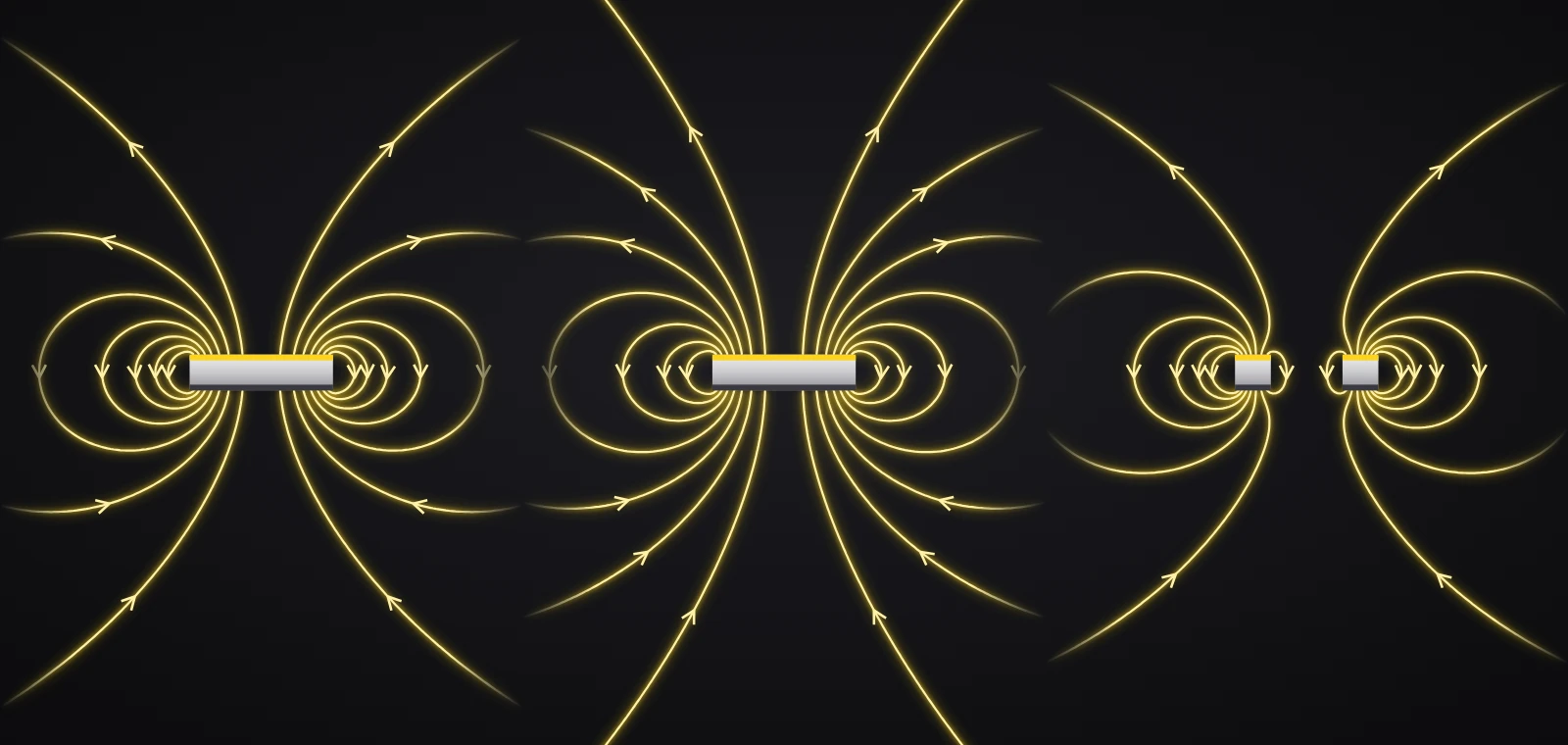
- Disc magnets are the all-rounder: strong for their size and easy to fit into a drilled hole.
- Block magnets give a long, flat contact area, good for strips, doors and panels.
- Cylinder magnets are longer than they are wide. They pack a lot of magnet behind a small face, which suits drilled holes and tight spaces.
- Ring magnets fit over a bolt or a shaft. The hole removes some face area, so they hold a little less than a solid disc of the same size.
- Countersunk magnets screw straight onto a surface.
- Pot magnets sit in a steel cup that steers the field onto one face, so they hold far more than a bare magnet of the same size, as long as that face meets the steel squarely, so they can be ideal for a wide variety of applications.
How to measure pull force yourself
Some magnet shapes need specialist test equipment, but many, such as pot magnets, can be checked at home with a digital hanging scale, the kind sold for weighing luggage.

- Clamp a thick, flat, clean steel plate so it cannot move, with its underside free.
- Stick the magnet to the underside, flat and in full contact. A pot magnet with an eyebolt makes the hook easy; for a plain magnet, use a strap or holder that pulls from the centre.
- Hook the scale on and pull straight down, slowly and steadily, until the magnet lets go. Note the peak reading.
- Repeat three times and take the average.
Expect your result to come in below MagNet™'s figure unless your steel is as thick, flat and clean as the test assumes. The speed at which you pull also matters, so pull slowly and steadily. Wear gloves and eye protection, keep fingers out from between the magnet and the steel, and keep the magnet away from phones, cards and pacemakers.
Magnet safety
Neodymium magnets are far stronger than they look. Larger ones snap together hard enough to pinch skin, break fingers or shatter, throwing sharp fragments.
- Handle large magnets one at a time and slide them apart rather than prising them.
- Keep them away from pacemakers and other implanted medical devices, and from bank cards, phones and watches.
- Keep small magnets away from children. Swallowed magnets can attract each other through the gut and cause serious injury.
- Do not machine or drill neodymium; the dust is a fire risk.
Read our full magnet health and safety guide before working with large magnets.
Magnet pull force: frequently asked questions
How much weight can a magnet hold?
Less than its pull force in most real jobs. Pull force is the most a magnet holds when pulled straight off thick, flat, bare steel with no gap. Plan with the design figure instead, and allow more for sideways loads, painted or thin steel, vibration or anything overhead. A Ø20mm × 10mm N42 disc has a maximum pull force of 12.12kg and a Design figure of 10.8kg. Test your own application before you rely on it.
How do you calculate magnet pull force?
Enter the shape, size and grade into MagNet™ above. It gives the estimated maximum pull straight off thick, flat mild steel, in kg, N or lb, along with a design figure to plan around. Then use “Through a gap”, “Thin steel” and the other sections to see what your real conditions leave.
Is there a formula for magnet pull force?
There are textbook formulas, but each one leaves out something that matters: the gap, the thickness of the steel, the shape of the magnet or the way its field spreads. That is why they can be well out for a real magnet. MagNet™ gives a direct estimate for your size, shape and grade instead.
How is magnet pull force measured?
The magnet is placed flat on a thick, flat, clean mild steel plate and pulled straight off with a force gauge, slowly and steadily, until it lets go. The peak reading is the pull force. You can do a simple version at home with a digital hanging scale and a pot magnet with an eyebolt.
What does the kg figure mean?
It is the force needed to pull the magnet straight off the steel, expressed as the weight it matches. A 5kg pull force means it takes the same force as lifting 5kg to pull the magnet free in perfect conditions. One kilogram of force is 9.81 newtons, and MagNet™ shows kg, N and lb.
Does paint reduce magnet strength?
Yes. Paint holds the magnet away from the steel, so it acts as a gap. For a Ø20mm × 5mm N42 disc, a 0.1mm gap leaves 91% of the pull and a 0.5mm gap leaves 67%. Thick powder coatings, plastic covers and tape cost more. Use “Through a gap” in MagNet™ to see your own magnet.
Why does my magnet hold less than MagNet™ says?
The figure assumes a straight pull off thick, flat, clean mild steel with nothing in between. A gap from paint or tape, thin or stainless steel, a sideways load, a curved or rough surface, or heat each lower the hold. Check each one in MagNet™, and use the design figure when planning.
Which is stronger, N35 or N52?
N52. For a Ø20mm × 5mm disc, N52 holds 9.64kg against 6.51kg for N35, around 48% more. The step from N42 to N52 is smaller, 23.6% for that size. If you need more hold, compare the next size up in N42 as well: MagNet™’s “By pull force” section lists both.
Does stacking magnets make them stronger?
Yes, up to a point. Two discs stacked face to face behave much like one thicker disc, so they hold more, but not twice as much. A Ø20mm N42 disc holds 7.80kg at 5mm thick and 12.12kg at 10mm. A wider magnet usually gains more than a thicker one.
Do neodymium magnets lose strength over time?
Hardly at all at room temperature: a neodymium magnet keeps its strength for decades. What weakens one is heat above its grade’s limit, a strong opposing field, corrosion through damaged plating, or a crack from being dropped or snapped together.
Is pull force the same as gauss?
No. Gauss measures the field strength at one point, usually at the surface. Pull force is how hard the magnet holds onto steel, which depends on its whole size and shape. A small magnet can show a high gauss reading and still hold little. MagNet™ shows both.
Does the thickness of the steel matter?
Yes. The steel has to carry the magnet’s field, and thin sheet cannot carry all of it, so the magnet holds less. Beyond a certain thickness, more steel adds nothing. The “Thin steel” section of MagNet™ shows that point and the hold on thinner sheet for your magnet.
What is the difference between pull force and holding force?
Many people use the two terms for the same thing: the force to pull a magnet straight off steel. In a real fixing the useful holding force is usually lower, because of gaps, thin steel and sideways loads. Sliding force, along the steel, is lower again.
Can I use the pull force as a safe working load?
No. It is an estimated maximum for perfect conditions, not a rating. Plan around the design figure with a generous margin, add a mechanical fixing for anything that could fall or hurt someone, and test your own application before relying on it.
Find the right magnet
Once you know the pull you need, MagNet™'s “By pull force” section lists the magnets that give it. You can also browse the full magnet shop, start with disc magnets or block magnets, or ask us to make a size that is not listed with custom magnets.
Not sure which magnet suits your job? Contact the Magnet Store team with the size, the load and the surface, and we will help you choose. Every figure on this page is an estimate: test your own application before relying on it.